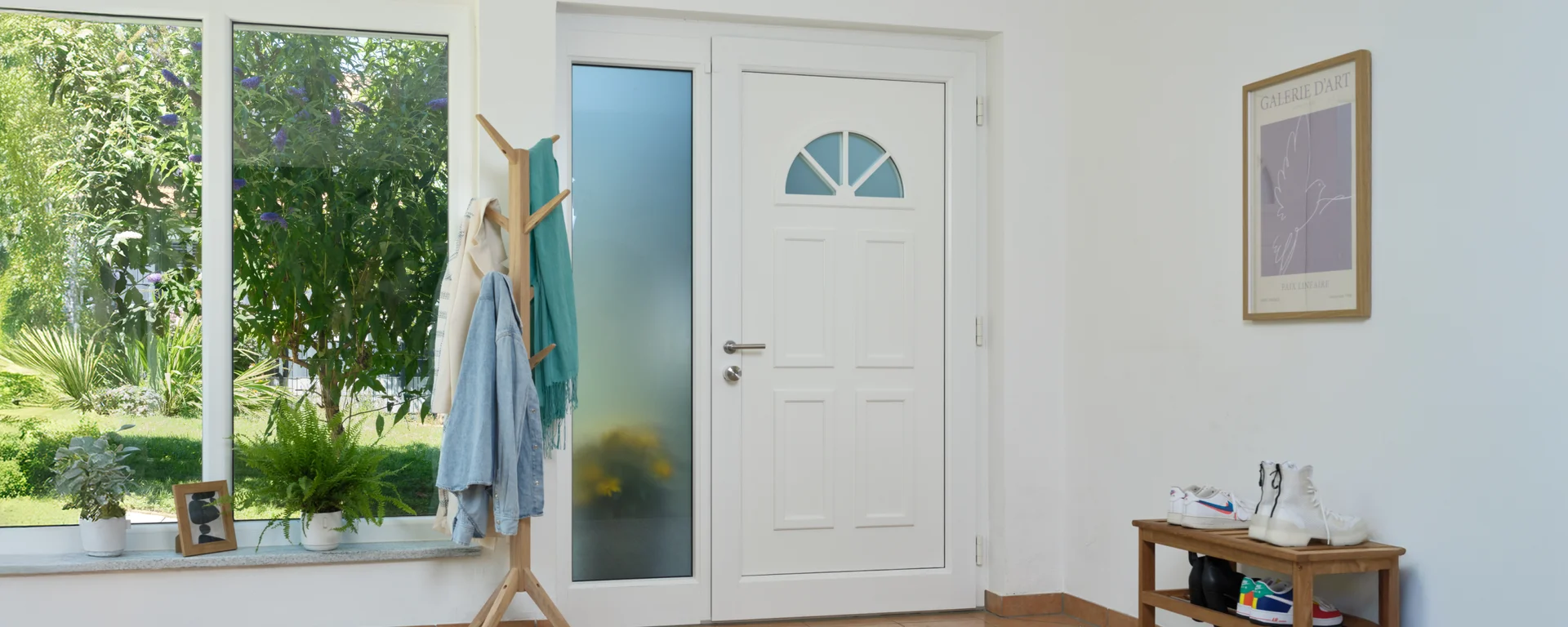
Accessibility starts at your front door.
How Nuki makes everyday life easier in every situation
For people with physical disabilities, accessing their own home can be an insurmountable barrier. Smart access solutions have the potential to overcome such hurdles and offer real independence.
When smart access becomes a piece of freedom
In 2016, a serious car accident changed Timo Stiehl’s life in an instant. A Grade 3 traumatic brain injury threw everything off track. He had to painstakingly relearn everything most people take for granted – breathing, eating, walking. His biggest goal: to one day play the piano again. But until then, every step toward independence is a triumph.
For Timo, accessibility means not only being able to go out into the world, but also getting into his own home. It’s not about how to better insert the key into the lock, but rather: how to regain independent access to his home – without help.
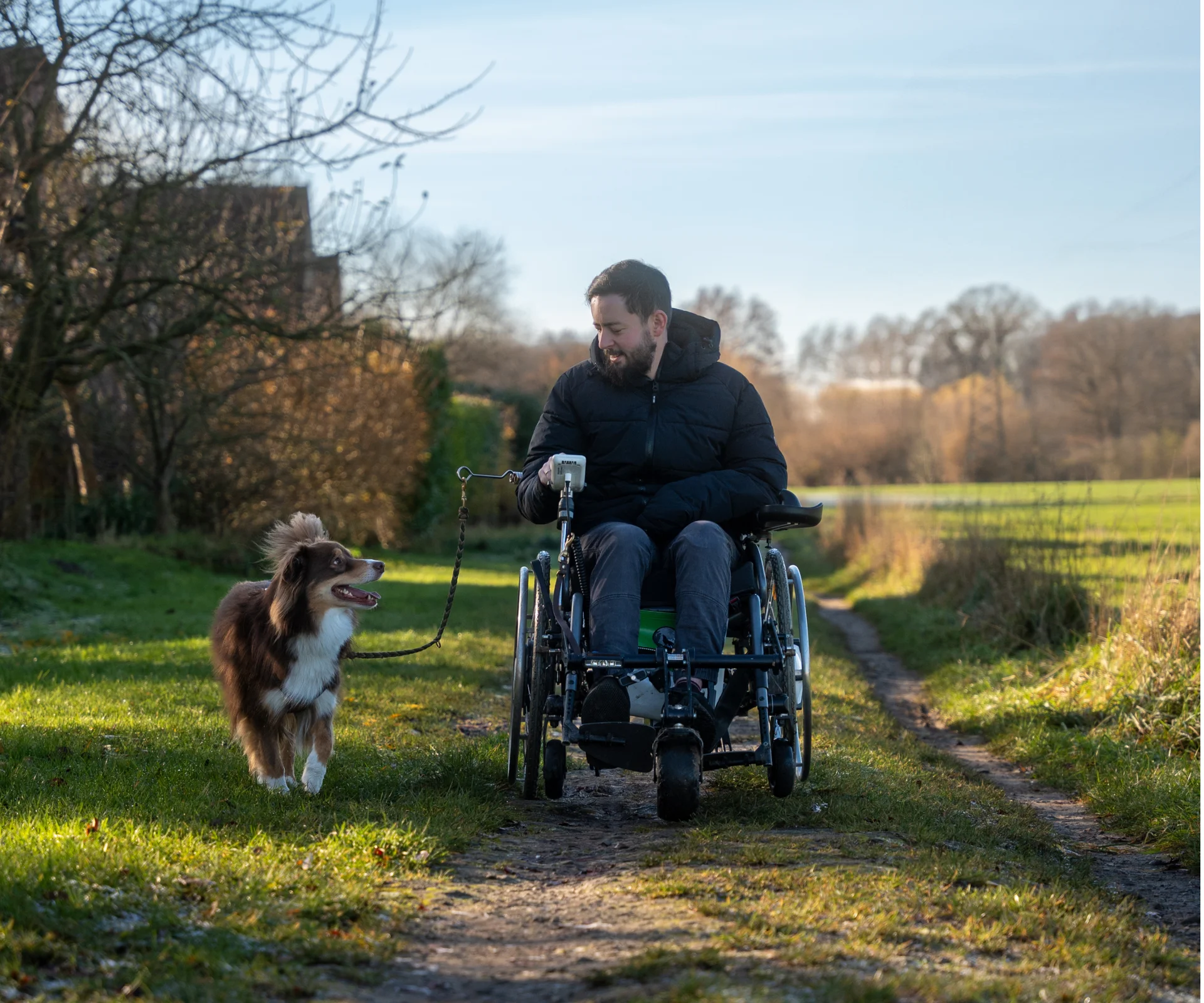
Barrier-free access thanks to Smart Lock and Keypad 2
We provided Timo with a 5th generation Smart Lock Pro and a Keypad 2 with fingerprint functionality. He shared his experience with us:
Timo, you've been using Nuki’s keyless access solution for a few weeks now. How has it changed your life?
TIMO STIEHL: Nuki benefits me simply because I no longer have to carry a key with me. In my wheelchair, I always found it difficult to unlock the door and apply the necessary counter-pressure to push it open. I had bought a turning aid for that – something I showed a while ago in one of my “Accessibility Wednesday” videos. But now I don’t even need that anymore. And honestly, I’m glad – it was always quite bulky in my bag!
You’re using the 5th generation Smart Lock Pro together with the Fingerprint Keypad. Which features do you think are especially helpful for people with disabilities? And which ones do you personally use the most?
TIMO STIEHL: The fingerprint feature and Auto Unlock are, in my opinion, essential for people with disabilities. For instance, in case of a seizure or fall, I could unlock the door for the emergency services using my phone. That alone gives me peace of mind! It’s also super handy if we’re not home and a neighbour needs to water our plants – we can just share a one-time code. For Nele, the Auto Unlock feature is incredibly helpful. If she’s carrying groceries and has no free hand for a key, Auto Unlock takes care of it. The door unlocks automatically, and she can just walk in. And when I go shopping, I benefit from this feature too – it’s amazing!
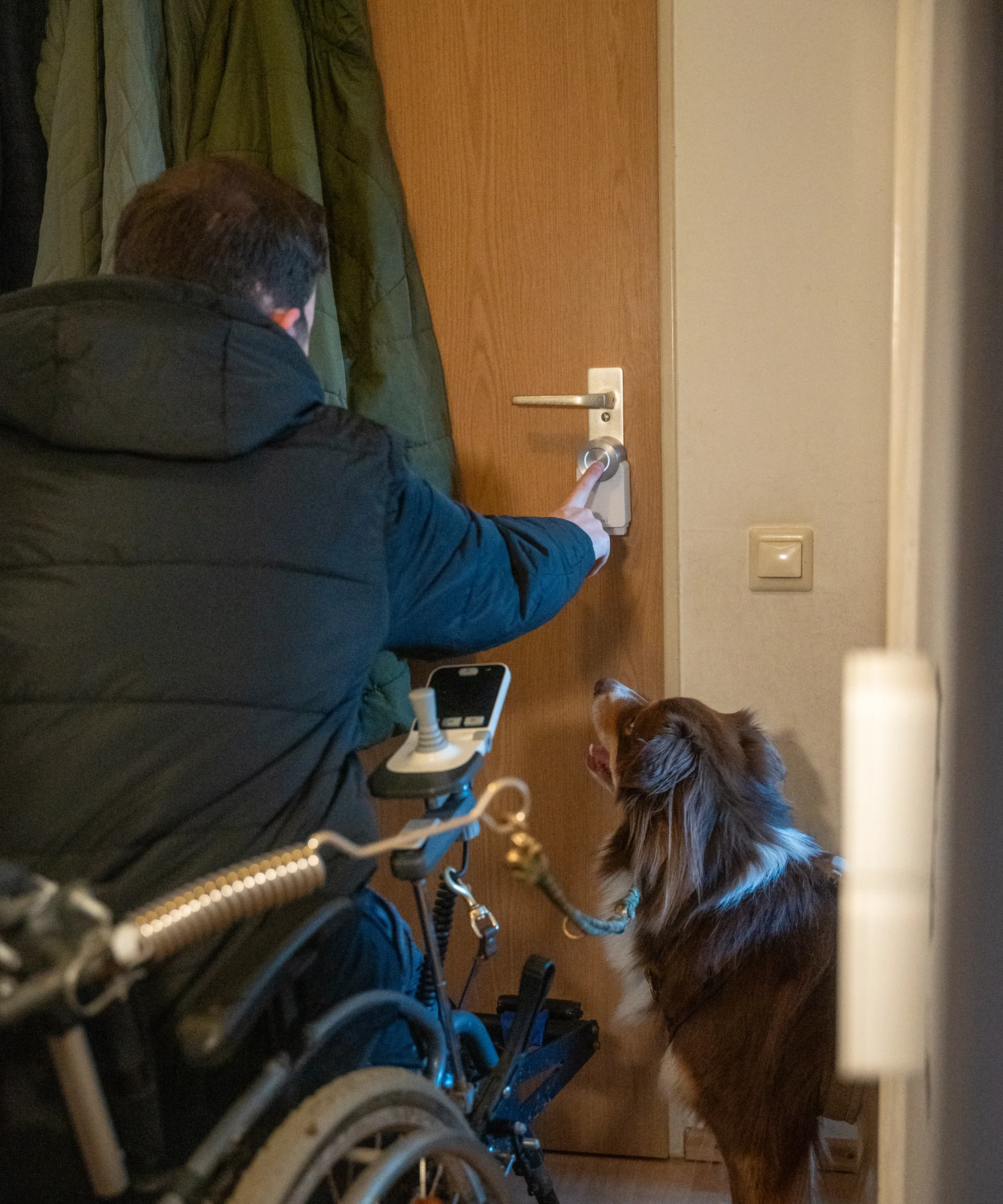
With the Smart Lock inside...
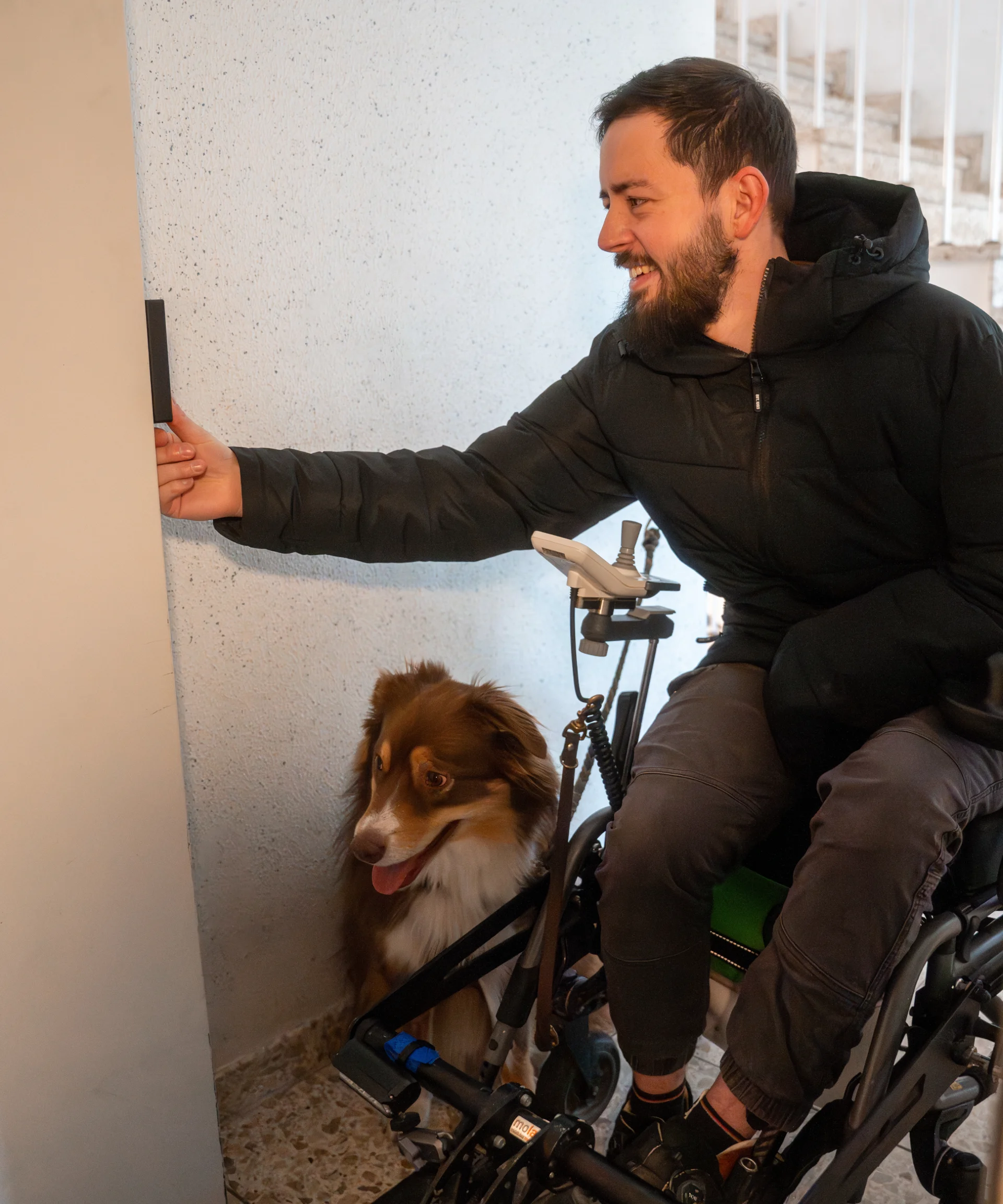
...and the Keypad 2 outside...
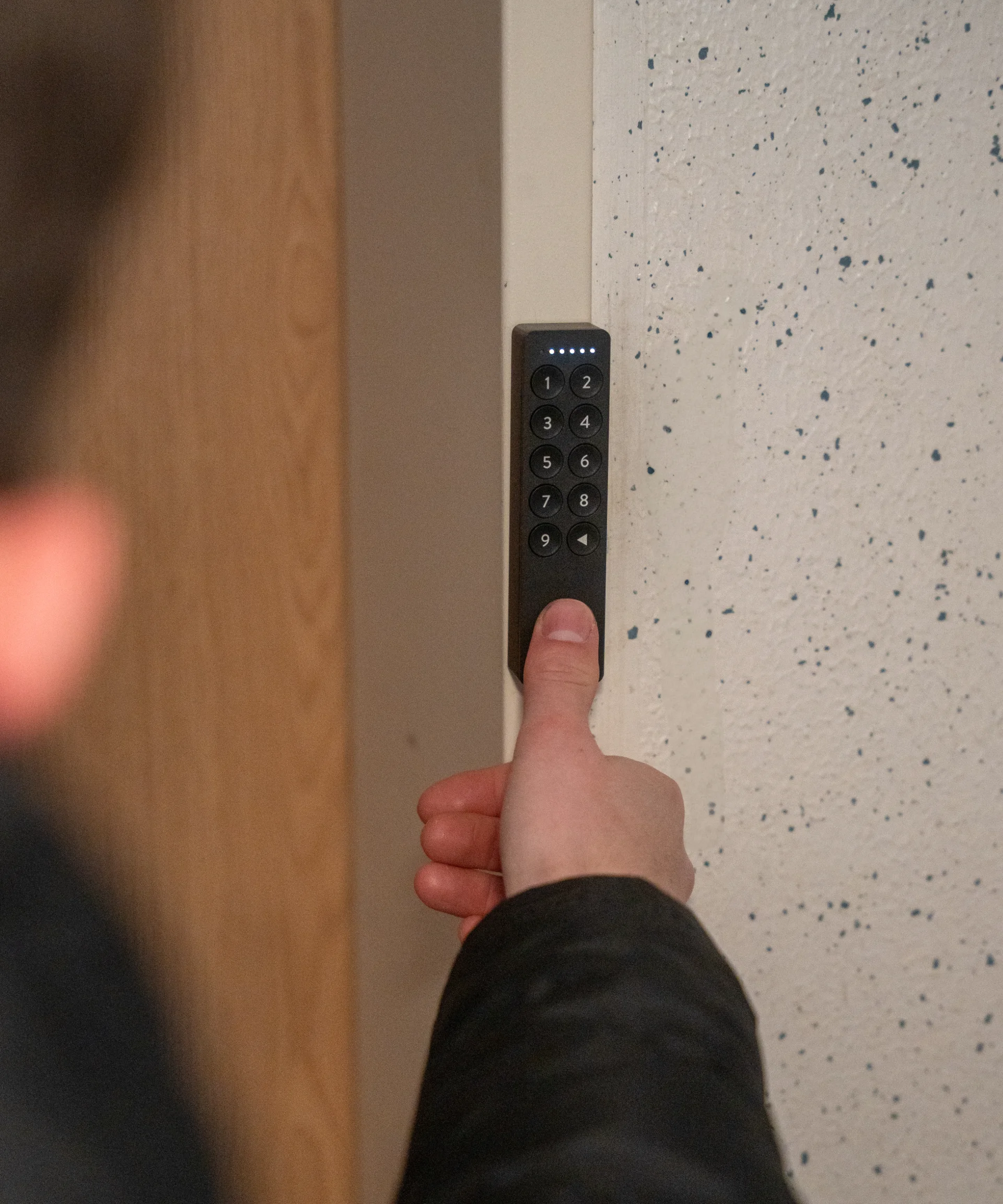
...the door unlocks with a fingerprint.
How was the installation process for you?
TIMO STIEHL: Thanks to the many Nuki tutorials on YouTube, the installation was super easy. It was quick, simple, and worked smoothly on the first try.
How important is it to you that you can grant access to others as well?
TIMO STIEHL: Since we regularly test accommodations for accessibility, the option to provide neighbours with a one-time code is incredibly helpful – whether it’s for watering plants or handling other urgent tasks. It’s also vital that in case of a seizure or fall, a code can be given to emergency services over the phone. And if we’re ever running late and our dog Nemo is home alone, a neighbour can pick him up with a code and take him for a walk.
The fingerprint feature and Auto Unlock are, in my opinion, essential for people with disabilities.

You love travelling and often identify barriers in holiday rentals. What are the most common access-related obstacles you’ve encountered? Could a Nuki solution help people with disabilities gain more freedom while travelling?
TIMO STIEHL: Absolutely. The front door is always the first thing that comes to mind. My girlfriend always has to open it for me because I can’t do it from the wheelchair – or only with great difficulty. I’ve often thought: a Smart Lock would really make sense here! Especially in newly built homes that are supposed to be optimised for people with disabilities. I love external key openers too, but a Smart Lock is definitely the more affordable and flexible solution.